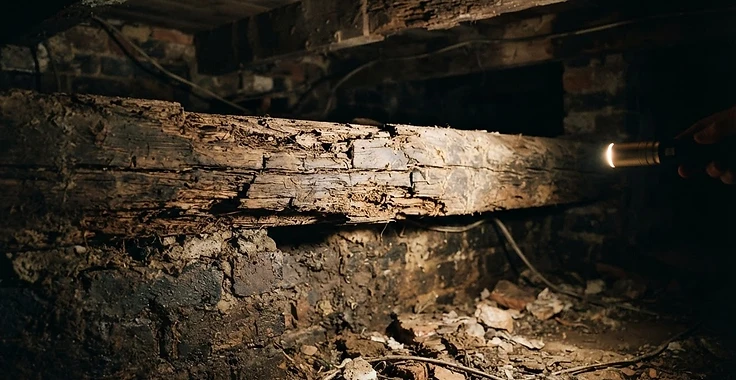
The difference from dry rot, in plain English
Wet rot needs the timber it is in to be wet, and stops when that timber dries. Dry rot can extend beyond the wet area, growing across masonry to reach drier timber elsewhere. That difference is why dry rot generally calls for a wider investigation, while wet rot is usually a more contained repair.
Common signs
- Timber that is soft, spongy or darkened
- Paint that looks intact but with soft wood beneath
- Shrinkage, cracking along the grain and loss of section
- Localised decay next to a known leak or damp wall
- Window sills, door frames and external joinery breaking down
Where it usually occurs
- External joinery exposed to weather and failed paint
- Below leaking gutters, downpipes and overflows
- Around long-standing plumbing leaks under floors
- Joist and lintel ends in damp walls
- Cellar and subfloor timbers with poor ventilation
Investigation and repair
The work is straightforward in principle: find why the timber is wet, stop it, allow it to dry, then cut out and replace what has lost strength. Sound timber that has simply been damp usually does not need replacing. Where treatment is appropriate we will say so, and where it is not, we will say that too.