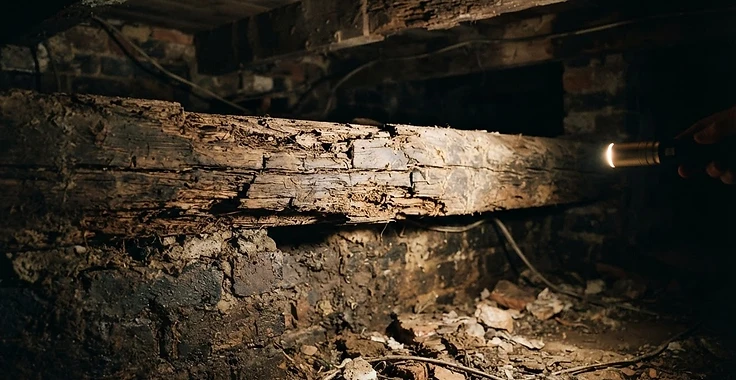
What dry rot is
It is a fungal decay of timber that breaks down the wood, causing it to shrink, crack and lose strength. Unlike wet rot, it can extend beyond the originally wet timber, travelling across and through masonry to reach dry wood elsewhere.
Common signs
- Timber cracking into cube-like sections, often darkened and brittle
- Timber that crumbles or feels light and hollow
- Fine strands or sheet-like white or grey growth on timber or masonry
- A distinctive damp, mushroom-like smell
- Fruiting bodies with a rusty-orange dust around them
- Skirtings, joist ends or floorboards moving or collapsing underfoot
Why the moisture source matters most
Dry rot cannot continue without moisture. Historically it was often treated with extensive chemical application and wholesale timber removal. A more measured approach identifies and eliminates the water source, removes decayed timber, and treats only where it is genuinely warranted.
Where it tends to be found
- Joist ends built into damp external walls
- Poorly ventilated subfloor voids and cellars
- Under stairs, behind panelling and in other enclosed areas
- Around long-term plumbing or rainwater leaks
- Concealed timber in older properties with limited air movement
Inspection
Because dry rot can spread out of sight, inspection needs to establish the extent as well as the presence. That may mean lifting boards, opening up small areas, and examining adjacent structure — always as far as is genuinely necessary and no further.
Treatment principles and repair
- Find and eliminate the source of moisture
- Improve ventilation and promote drying of the affected structure
- Remove decayed timber back to sound material
- Repair or replace timber that has lost structural strength
- Apply treatment where the situation warrants it, not as a default
- Reinstate finishes once the structure is drying properly