Woodworm and insect activity
Small round exit holes in joinery or joists are common in older properties and do not always mean an active infestation. We look at whether activity appears current, which timbers are affected, and what conditions may be supporting it.
Timber decay and moisture-related damage
- Joist ends built into damp external walls
- Floor timbers over poorly ventilated or damp subfloor voids
- Timbers below leaking gutters, valleys or plumbing
- Skirtings, door frames and window joinery affected by persistent moisture
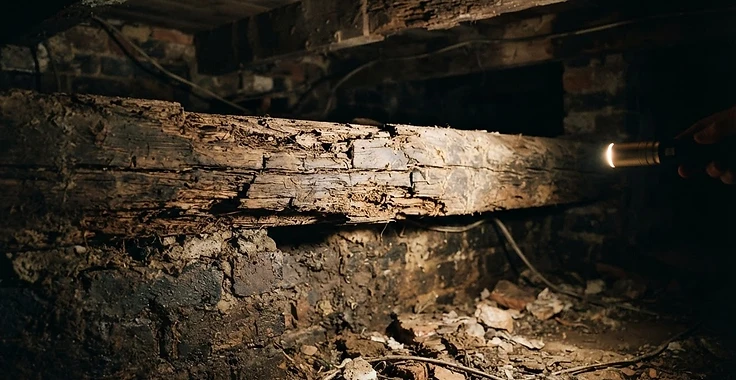
- Structural timbers softened, darkened or losing section
Wet rot and dry rot
Wet rot is the more common of the two and is generally confined to timber that is actually wet. Dry rot can spread further from the original moisture source and usually warrants a more thorough investigation of the surrounding structure. We explain the difference in plain English on the dedicated pages.
Floor and structural timber concerns
Where floors feel soft, springy or smell musty, we look at ventilation to the void, ground conditions beneath, and the condition of joists and bearings. Where timber has lost strength, repair or replacement may be needed alongside any treatment.
Resolving the moisture source first
Any timber treatment we recommend is paired with the repair that stops the wood getting wet again — whether that is a gutter, a render crack, a bridged damp-proof course or a subfloor ventilation problem. Treatment alone is not a cure for a wall that keeps getting wet.