External walls and exposure
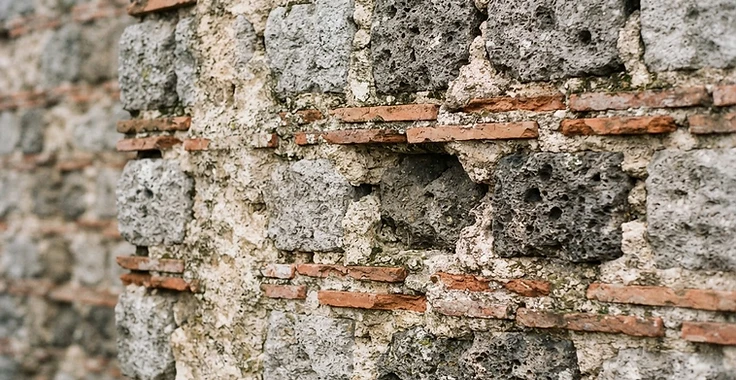
Walls facing the prevailing wind and rain take the most water. Solid walls, older brickwork and eroded mortar joints are more vulnerable, particularly where a wall has lost its protective outer face or has been coated in something impermeable.
Pointing and brickwork
- Eroded, cracked or missing mortar joints
- Hard cement pointing on soft historic brickwork
- Spalled or frost-damaged brick faces
- Poorly filled joints from earlier repairs
Roof, gutter and rainwater interfaces
A surprising proportion of internal damp turns out to be a rainwater goods problem. Blocked or leaking gutters, split downpipes, defective flashing at abutments, and poorly detailed valleys all deliver water directly onto or into a wall.
Cracked render and coatings
Render is only weatherproof while it is sound and well bonded. A crack lets water behind the render, where it can be held against the wall rather than allowed to dry — sometimes producing internal damp some distance from the crack itself.
Leaking pipes and defective seals
- Failed mastic around window and door frames
- Defective window sills and missing drips
- Leaking waste pipes, overflows and external taps
- Central heating or supply pipework within walls and floors
Damp that appears after rain
If a patch darkens after prolonged rain and then dries back, penetrating damp is a strong candidate. Noting when it appears, from which direction the weather came, and how long it takes to fade is genuinely useful information to bring to a survey.
Diagnosis and repair
The aim is to identify the point of entry, repair it, and then deal with the internal damage once the wall is drying. Replastering before the water is stopped simply hides the problem for a season.
If the problem seems worse after rain, our damp check guide includes a simple outside inspection checklist. Read the guide online or download the free PDF.