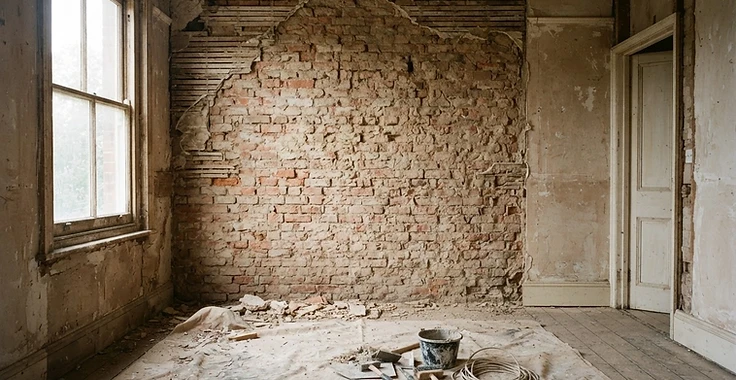
The symptoms homeowners usually notice first
Most people contact us because of something they can see, smell or feel rather than because they know what type of damp they have. Common signs include:
- A tide-mark or darker band on a ground floor wall
- Blown, bubbling or crumbling plaster near skirtings
- Paint or wallpaper lifting away from the wall
- White salt-like deposits on the plaster surface
- A persistent musty smell in one room
- Cold, damp-feeling walls and mould in corners
- Damp that appears or worsens after heavy rain
Why diagnosis matters more than treatment
Two walls that look identical can be damp for completely different reasons. A chemical damp-proof course installed in a wall that is actually suffering from a leaking gutter will not solve anything — the moisture simply continues to arrive.
Our approach is to find the source before treating the symptom. That means looking at the outside of the building as well as the inside, considering how the property was constructed, what has been altered over time, and how the room is used.
Common sources of moisture in Colchester homes
- Rainwater ingress through defective pointing, render cracks or failed seals
- Blocked, leaking or misaligned gutters and downpipes
- Raised external ground levels, paths or patios bridging the damp-proof course
- Plumbing and heating leaks below floors or within walls
- Condensation caused by ventilation, heating and occupancy patterns
- Cement renders and gypsum plasters applied to solid walls that need to breathe
- A failed, bridged or absent damp-proof course in an older property
How we inspect a property
A typical inspection involves a walk around the outside of the building, an internal assessment of the affected areas, moisture readings where useful, and questions about the history of the property and the problem.
- External inspection: walls, pointing, render, ground levels, rainwater goods
- Internal inspection: affected walls, skirtings, floors and adjacent rooms
- Moisture readings and observation of plaster condition
- Discussion of heating, ventilation and how the room is used
- A plain-English explanation of what we think is happening and why
Treatments we may recommend
Treatment follows diagnosis, and is kept proportionate to the problem. Depending on what we find, that might include:
- Remedial damp-proof course installation where a genuine DPC failure is identified
- Localised removal and reinstatement of salt-contaminated or defective plaster
- Repairs to external defects such as pointing, render, seals or rainwater goods
- Lowering or improving ground levels and drainage where these bridge the DPC
- Moisture management and ventilation improvements where condensation is the driver
- Tanking or waterproofing to below-ground walls where appropriate
- Timber treatment or repair where moisture has affected structural timbers
What affects the cost of damp proofing
We do not publish fixed prices, because the same visible symptom can require very different work. The important first step is understanding what is causing the moisture. Two walls that look similar can need completely different solutions.
- The underlying cause and whether external repairs are needed
- The size and number of affected areas
- Access, including furniture, fitted units and floor coverings
- Whether plaster needs removing and reinstating, and to what height
- Any timber damage found during investigation
- Whether waterproofing to below-ground areas is required
Disruption and access
Damp work varies from a modest external repair to plaster removal in one or more rooms. Where internal work is needed, rooms usually need to be cleared along the affected wall, and replastered surfaces need time to dry before decoration. We will tell you what to expect before anything starts, including where we think the work can reasonably be kept smaller.